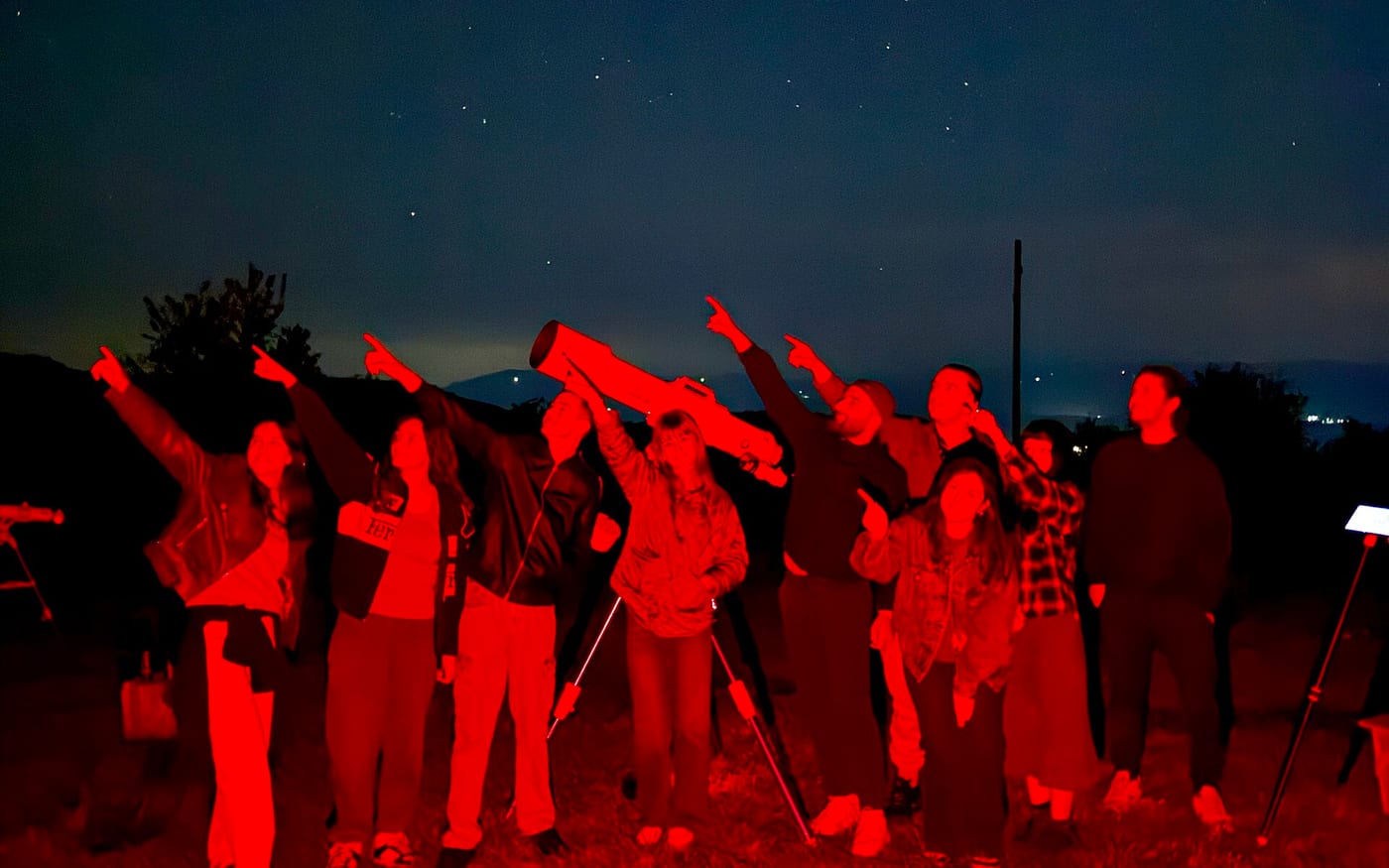
The first night out usually goes like this. An hour of driving to a field that looked darker on the map, twenty minutes of assembly by phone light, and then a look at the moon that is genuinely magnificent for about ninety seconds, until somebody turns on a headlamp to find a glove and the whole sky disappears.
The telescope did its job. The night around it did not.
That gap is what this list is about. A telescope is the first purchase almost everyone makes, and it is usually the wrong thing to buy first: the mount is what makes an image steady, the eyepieces decide how much you can see, and a red headlamp decides whether your eyes are worth pointing at anything. Fifteen ideas, all of them the second purchase.
Why the telescope was the easy part
Aperture gets all the attention because it is the number on the box. It is also the number that matters least for someone observing from a driveway.
The mount decides whether the view settles. A good tube on a light tripod shakes for three seconds every time a hand touches the focuser, and a shaky image reads as bad optics even when the optics are fine.
The eyepiece decides the magnification. Every boxed telescope ships with one or two cheap eyepieces and a number on the tube that suggests far more power than the sky will actually allow.
The eyes decide the rest. Rods need twenty to thirty minutes in the dark to reach full sensitivity, and a single white light resets the clock. This is why the cheapest item on this page changes the most nights.
The record decides whether it happens again. Objects found and not written down are objects found once. A log is what keeps people going out in February.
What to fix first: the thing the scope stands on
1. A tripod that does not transmit every touch— Best for the shaky view that gets blamed on the telescope
Tap the focuser on a light tripod and the image swims for a count of three. A steadier tripod, ideally one with a spreader and a hook for a bag of sand or a water bottle, removes that entirely. Check the head interface before buying: most beginner scopes use a 1/4 inch thread, but some use a proprietary plate that will not fit anything else.
2. An eyepiece kit that adds the two focal lengths nobody ships— Best for the owner still using the eyepiece that came in the box
Most starter scopes include a 25mm and a 10mm plossl, which covers two magnifications and skips the range in between that most objects actually need. A small kit with three or four focal lengths plus a barlow doubles the usable options without buying a new tube. Skip the coloured filter sets that come bundled with cheap kits. They get used once and then live in a drawer.
3. A moon filter, because the moon is genuinely painful— Best for the first clear night with a full moon
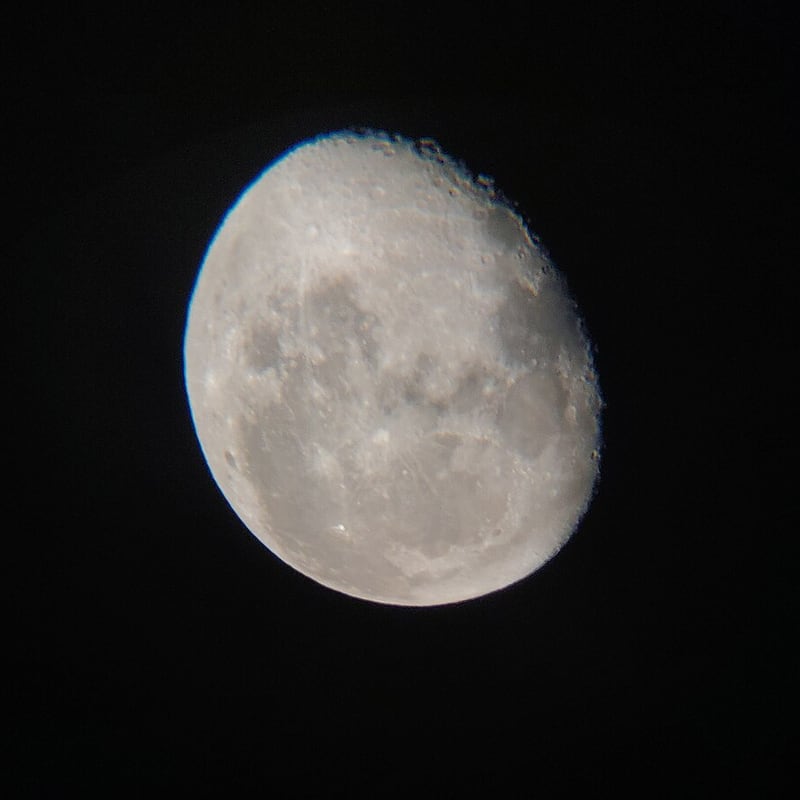
A full moon through a small telescope is bright enough to make you flinch and to wash out the craters you came for. A neutral density filter screws into the eyepiece and cuts most of that light, so the terminator line, where the shadows actually are, stops being a white blur. Around 13 percent transmission is the usual starting point.
4. A solar filter that goes over the front, not in the eyepiece— Best for the person who wants to see a sunspot, safely
This is the one item where the wrong version is genuinely dangerous. A white-light film filter that caps the front aperture is the safe design; the old screw-in eyepiece filters concentrate heat and have blinded people, and they should be treated as scrap. Buy only a full-aperture front filter from a known maker, check the film for pinholes every time, and never look before the filter is seated.
5. A camera adapter for the phone or DSLR already in the drawer— Best for the person who keeps trying to photograph the moon by hand
Holding a phone to an eyepiece works about one time in thirty and produces a bright blur the other twenty-nine. A proper adapter clamps the camera to the eyepiece at the right distance, which turns a two second exposure of the moon into something worth keeping. For a DSLR, the pairing is a T-ring for the camera body plus a T-adapter for the scope, and both are needed.
Twenty minutes your eyes have to earn
6. A red light headlamp with a real low setting— Best for everyone who has ever ruined a dark adaptation with a phone
Red light keeps the rods working, white light throws away half an hour of adaptation in a second. The catch is that most red headlamps are far too bright, so look for one with a dim red mode rather than a single blazing setting. A headlamp also leaves both hands free for charts, focuser knobs and gloves, which a phone torch never does.
7. A planisphere, adjusted by date and hour— Best for the person who can find Orion and nothing else
A planisphere is two discs that rotate against each other, and setting it to the current date and time shows exactly what is above the horizon right now. That single trick is why it beats an app for beginners: no screen, no white light, no scrolling. Choose one matched to the latitude band they observe from, because a planisphere cut for the wrong hemisphere is a decorative object.
8. A pocket star atlas for star hopping— Best for the owner who wants to find things without a computer
Star hopping means moving from a star you can identify to a faint object you cannot, one short jump at a time. Too many stars on the page and it becomes noise; too few and there is nothing to hop between. A slim, laminated atlas that opens flat in the dark survives dew and gloves.
9. A logbook with a page per session— Best for the observer who has already seen the same galaxy four times
A log with fields for date, seeing, instrument and eyepiece turns a series of one-off nights into a record, and the record is what makes a return visit interesting. Pen still works at minus five, which cannot be said for most apps.
If there is no telescope yet
10. A small refractor on a mount that moves by hand— Best for the first scope, bought for someone who has never owned one
A 70mm to 80mm refractor on a simple altazimuth mount with slow-motion controls is the boring correct answer. It travels, it needs no collimation, and it shows the moon, the planets and the brighter clusters without a computer. Avoid anything advertising magnification in the hundreds. That number is a marketing decision, not an optical one.
11. A beginner book built around what a small scope can see— Best for the reader who wants a target list, not a physics lecture
The useful books are organised by object and season rather than by theory, and they tell you what a small instrument will actually show: a smudge, a double star, four moons in a line. That expectation setting matters more than the diagrams. A book that promises Hubble images and delivers grey fuzz is how a new telescope ends up in a cupboard.
12. A constellation map for the wall— Best for the beginner learning the sky indoors first
Learning six constellations before the first cold night makes the first cold night ten times better, and a large printed map on a wall gets looked at far more than a chart in a drawer. Look for one that shows the whole sky in a single view with constellation lines and the brighter stars named. It is also the rare astronomy gift that works in a small flat with no garden.
The indoor half of the sky
13. Glow constellations for a ceiling, honestly labelled— Best for the kid whose bedtime is the only clear sky they get
These are stickers, and the astronomy in them is roughly cereal box level, but they do one thing well: they put the summer triangle above a bed where it gets looked at every night. Useful for a child in a flat, faintly ridiculous for an adult. Be honest about which one you are buying for.
14. A projector for the cloudy weeks— Best for the observer in a country that has weather
A ceiling projector is not observing and should not be sold as such, but it keeps the interest alive through a fortnight of cloud, which is when most hobbies quietly die. The good ones let you set a date and show the sky as it is tonight. The bad ones spin a generic galaxy across the wall in fifteen colours.
15. A meteorite small enough to hold— Best for the person who wants something from outside the planet
A mounted specimen with a certificate of authenticity is a piece of another world that fits in a palm, and it is the gift that gets shown to visitors. Buy from a dealer who names the fall and the classification. Around the price of a decent eyepiece, and it never needs collimating.
What I would not buy
A telescope with a magnification printed on the box. A 600x scope for ninety dollars is a 60mm tube on a mount that cannot carry it. The number is meaningless without aperture and stability behind it.
A coloured filter set. Six tinted discs that make Jupiter slightly green once, then live in a case forever.
The editor’s pick
The red headlamp. It is the cheapest thing here, the least exciting to unwrap, and the one that changes every other item on the list: the eyepieces only show what the eyes can see, and the eyes need half an hour of darkness to be worth anything. Twenty dollars spent on red light makes a hundred dollars of eyepiece perform, which is a rare ratio in any hobby.
FAQ
What do you buy someone who already has a telescope?
A steadier tripod, a better eyepiece, or a red light headlamp. Owners upgrade the tube and neglect everything around it, so ask what wobbles and how they find things in the dark. The answer usually costs less than the telescope they already own.
Is a telescope a good gift for a beginner?
Only with the mount included in the thinking. A 70mm refractor on a stable altazimuth mount beats a larger tube on a shaky one, and the gift works better when it comes with a book and a planisphere. Without those, a first telescope tends to get used twice and then stored.
How much should you spend on a gift for an astronomy lover?
Twenty to forty dollars covers the red headlamp, planisphere and moon filter, which are the three things most owners never buy for themselves. Fifty to a hundred is the eyepiece and tripod range. Above that you are into instruments, and instruments should be chosen by the person who will use them.