My mother called me from the kitchen once with the phone held six inches from her face. It’s got a red cap and a black and white back, she said. What is it. By the time I found the book, the bird was gone, and the question had turned into a small grudge she carried for a week.
That is birdwatching for almost everyone who does it: forty seconds of bird, ten minutes of not knowing, and a note to look it up later that never gets looked up.
Binoculars get all the gift attention, and they’re usually the wrong purchase, because the birder you’re shopping for already owns a pair and has learned exactly how they behave in low light. What’s missing is everything around the optics. A feeder that puts a bird eighteen inches from a window. A baffle that keeps the squirrel off it before nine in the morning. A book that answers the question while the bird is still on the branch.
Fifteen gifts below, sorted by the jobs a birder’s yard actually has to do. One of them is binoculars. The other fourteen are the reason binoculars are worth owning.
Three questions before you spend anything
Yard or window? These are different hobbies at the shopping level. A city apartment gets a window feeder and nothing else. A house with a fence line gets the pole, the baffle and the feeder that survives weather. Buying for the wrong one is how a thoughtful gift ends up in a garage.
Do they keep a list? Someone with a life list will use a journal and a regional guide until they fall apart. Someone who just likes having birds around wants neither. The list-keepers are the easier people to shop for, oddly, because their habits are visible.
What’s winter like where they live? If the ground freezes, unfrozen water becomes the scarce thing in the yard, not food. That single fact reorganizes half of this page.
The eleven minutes before coffee
Most birding isn’t a walk. It’s a person standing at a window in a dressing gown, holding a mug, waiting to see what shows up. Everything in this section exists to make those eleven minutes busier.
1. A feeder that sticks to the window— Best for kitchens where the only green space is a pane of glass
Two strong suction cups and a clear tray, and the closest bird you will ever see is eighteen inches away, completely unaware of you, because it cannot see through the glass at that angle. You refill it from inside, in socks. Clean the glass first and mount it where a cat cannot sit on the sill and stare.
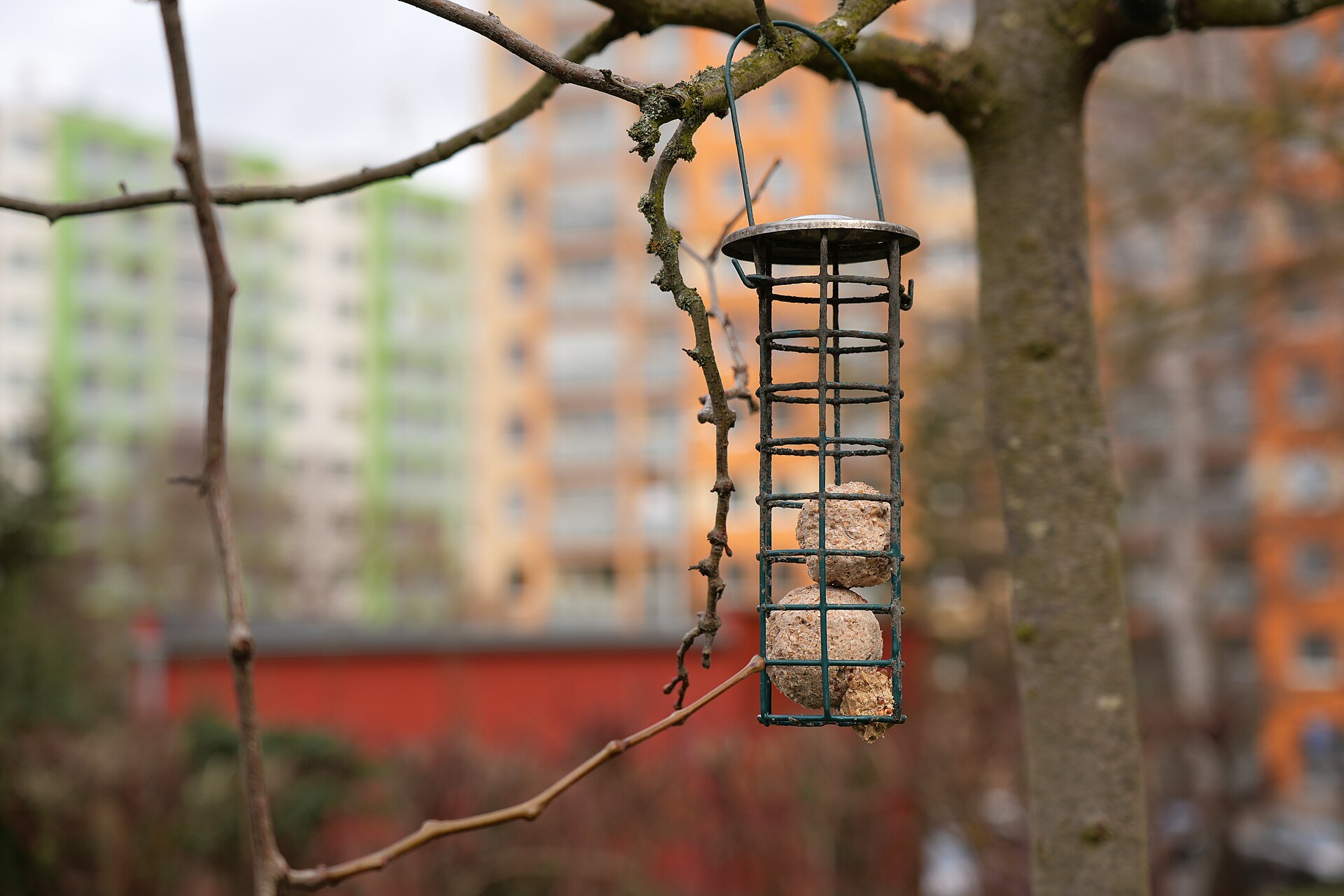
2. A squirrel-proof cage feeder— Best for anyone who has watched a squirrel empty a feeder before breakfast
The good ones work on weight: a squirrel puts its whole body on the perch and a metal cage slides down over the ports, while a finch barely moves it. Buy the caged metal kind rather than the spring-loaded plastic kind, which loses tension after one season and quietly starts feeding squirrels again.
3. A stovepipe baffle for the pole— Best for the feeder that already works and is already contested
It stops the climb, and it costs less than replacing a feeder that is doing its job. The catch is geometry: it only works with the feeder about five feet up and ten feet clear of the nearest launch point, which is a fence, a shed roof or a determined gutter. Measure before you buy, or you have given the squirrel a staircase.
4. A pole system with two or four arms— Best for the yard with three feeders on three bent shepherd's hooks
One anchored pole, several arms, and a baffle that finally has something to attach to. Get one with a ground socket so the whole thing lifts out before a storm instead of becoming a kite. It also settles the household argument about which window gets the good feeder, since they all hang in one place.
5. A hummingbird feeder with an ant moat— Best for anyone with a window between April and September
The moat is the entire design: a small cup of water above the ports that ants will not cross. Without it you get a black line of them in an afternoon. Skip the models shaped like a dozen red flowers, because they are miserable to clean, and a feeder you dread cleaning is a feeder growing mold by July.
6. Nectar concentrate instead of sugar— Best for the person mixing syrup every third day and quietly resenting it
Ten seconds, correct ratio, no measuring cup. It also has no red dye, which the birds do not need and the feeder does not need either. In hot weather the syrup ferments in about three days, so the real gift is a bottle that makes the chore small enough to keep doing in August.
Making the bird hold still
Optics are the one category where a gift can be a genuine upgrade rather than an addition. They are also where most money gets wasted. A beginner with ten-power binoculars sees a narrower slice of the tree and every tremor in their own hands, and concludes they are bad at this.
7. 8x42 binoculars— Best for the pair that lives in the glovebox or on the back of the door
Eight power, forty-two millimetre objective: enough light at dawn, still small enough for a coat pocket. Roof prism, fogproof, and twist-up eyecups if they wear glasses, because glasses against flat eyecups is how people end up seeing a black crescent instead of a warbler. This is the size to buy for anyone who does not already have a strong opinion.
8. A binocular harness— Best for anyone who has carried a pound and a half around their neck for three hours
It moves the weight onto both shoulders and stops the binoculars swinging into your sternum every time you bend down. Twenty-odd dollars, and it is the difference between bringing binoculars on a walk and leaving them in the car. Get one that clips to the strap lugs rather than threading through them, so the straps stay adjustable.
9. A 20-60x spotting scope— Best for shorelines, hawk watches, and the far bank of a lake
This is what turns a white dot into a loon. The 60x end is largely decorative on a warm day because of heat shimmer, so most people live between 25x and 40x, which is still four times what binoculars give. Angled is kinder to your neck; straight is easier to point at something moving fast.
10. A tripod for the scope— Best for the scope currently balanced on a fence post
A fluid head lets you pan without fighting the tension, and independently adjustable legs mean it sits level on a rock. Do not buy carbon fibre for a first tripod. Buy weight, because a light tripod in wind vibrates precisely when the bird arrives. Check that the head plate fits the scope foot, since nothing in this corner of the market is standardised.
Editor’s pick
If you’re buying one thing, buy the window feeder. It is the only object on this page that converts a hobby into a daily habit, because it puts the birds where the person already stands with a mug at seven in the morning. Everything else here supports that moment or improves it. The feeder creates it.
And if they live somewhere with a real yard and no window at counter height, buy the pole system instead, then let them choose their own feeder. Poles are boring. Poles are also the reason a feeder stops falling over.
Knowing what you are looking at
There is a specific kind of frustration in hearing a bird you cannot name. It’s most of birding in the first year. Two things fix it faster than better equipment.
11. A regional identification guide— Best for the glovebox, the kitchen drawer, and the bottom of a backpack
Regional beats national here, because the plates only show birds that actually occur where they live, and the good guides put similar species on facing pages so you compare instead of flipping. Range maps matter more than the artwork. This is also the one item on the page that works in a cold car with no signal.
12. A birdsong player with a quiz mode— Best for the person who hears everything and sees nothing
Learn a dozen calls and a walk in the woods changes completely, because you know what is in the tree before you look up. A small dedicated player beats a phone app for one reason: no screen to unlock with gloves on, and no notifications arriving mid-identification. Pair it with the guide and you have given a skill rather than an object.
The five months nobody plans for
A feeder gets a bird to the yard. Water keeps it there through a hard freeze, and in February that is genuinely scarce: every puddle is ice, and a bird that cannot drink has to burn energy melting snow.
13. A heated bird bath— Best for anyone north of the frost line
Thermostatically controlled, so it only draws power when the temperature drops and keeps the water just above freezing rather than warm. Keep the bowl shallow, two inches at most, and put a brick in it if it is deeper. This is the least exciting gift here and the one that gets used every day from December to March.
Proving it happened
The list is the part non-birders find baffling and birders find essential. It isn’t competitive, mostly. It’s the difference between a nice morning and a record of one.
14. A birding logbook— Best for the person who texts you photos of birds and then forgets the date
Columns for date, location, weather and species, which forces the two details that make a record useful: where, and what the sky was doing. That is what lets them compare this April with last April. eBird is better for science; paper is better for the ninety percent of people who will never open an app in a car park.
15. A nest box camera— Best for households with kids, or anyone running a bluebird trail
The whole sequence, close up: nest building, the clutch, twelve days of incubation, and then the morning they all leave inside about an hour. Run a cable rather than wifi if the box is more than thirty feet from the router. And never open the box to check on them, which is the exact behaviour the camera exists to replace.
Two things I would skip
A bag of seed. It weighs twenty pounds, it costs what a card costs, and it is the one thing a birder buys on a schedule. It reads as an errand you outsourced rather than a gift you chose. Nectar concentrate is the exception, because it solves a chore instead of restating one.
A birdhouse with a cute paint job. Most decorative boxes have a hole the wrong size, no ventilation, and a perch that lets predators reach in. If they want a nest box, they want one built to spec, and they probably already have opinions about which spec.
FAQ
What do you get a birdwatcher who already has binoculars?
Everything else on this page. The window feeder, a baffle for the pole, a regional guide, a heated bath for winter. Birders spend their money on optics and their mornings working around bad feeders, so the practical gifts land harder than another lens.
Is a bird feeder a good Christmas gift?
Yes, with one check first: whether they have anywhere to hang it. A window feeder suits an apartment and needs clean glass; a pole setup needs ground they control. If they rent and have an HOA, ask before buying, because some leases ban hanging anything from a balcony rail.
How much should you spend on a birdwatching gift?
Twenty-five to fifty dollars covers the feeder, the baffle, the guide and the journal, which is most of what changes someone’s mornings. The one place to spend more is a heated bath in a cold climate, or binoculars if they are still using a pair from a drawer.