Watch someone make two daiquiris and you’ll learn more about them than an hour of conversation would teach you. The first one is careful: the jigger gets filled level, the shake runs the full twelve seconds, the glass comes out of the freezer. The second one is looser, because they’ve already proved something to themselves.
That second drink is the honest one. It’s also usually worse, and the reason is never the rum. It’s that the ice was wetter, the pour was eyeballed, the shaker wasn’t cold enough, or the glass had been sitting on the counter since the first round. Four small changes, one flat drink.
So the gift that actually improves someone’s bar is never a bottle. It’s the thing that removes one of those variables permanently. Everything below does that, and none of it needs a recipe to justify existing.
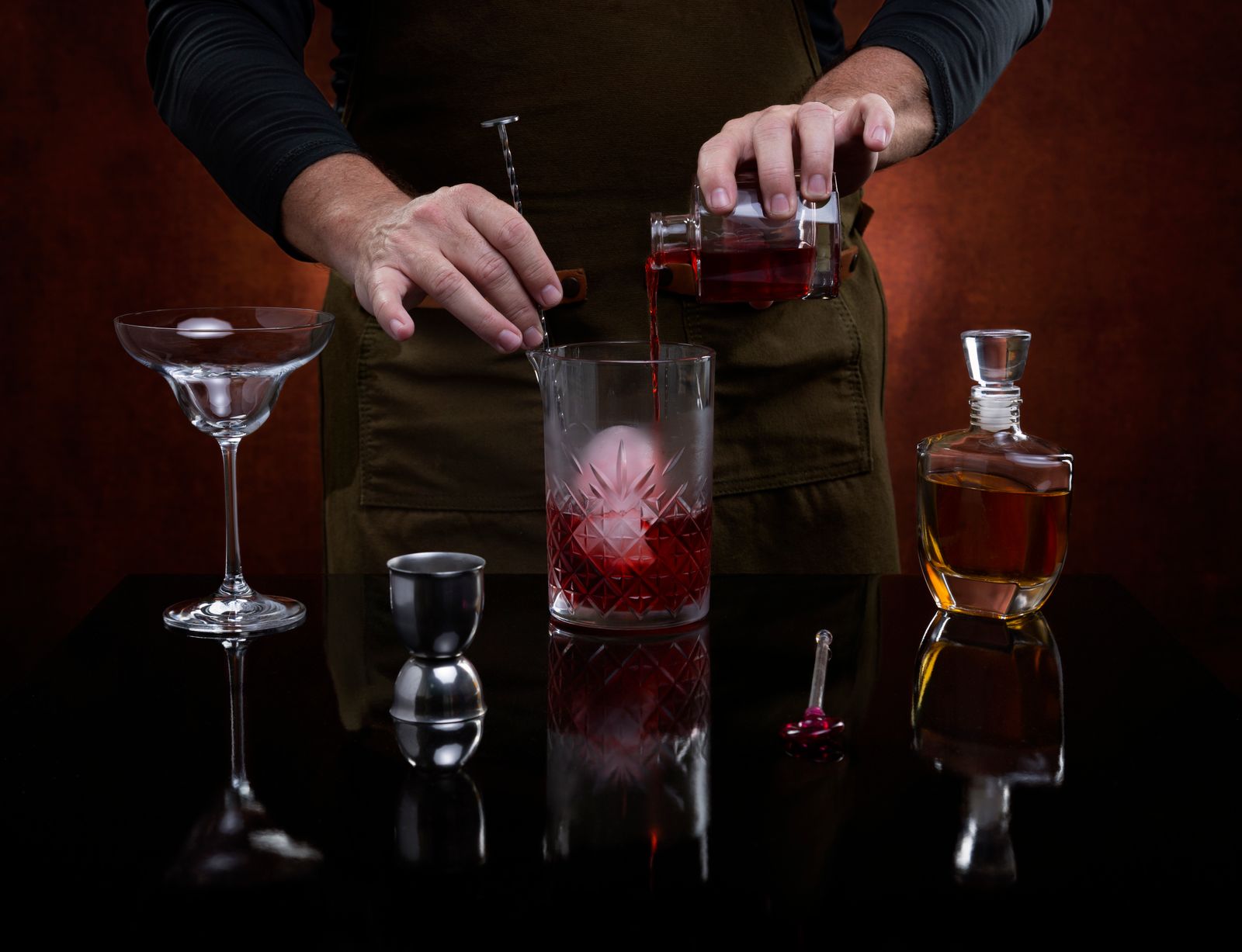
Where a drink actually varies
Before the list, the four places a good drink goes wrong at home, because they decide what’s worth buying.
Ice. Small, wet, straight-from-the-freezer cubes dilute fast and chill slowly, which is the worst combination available. Big dry ice does the opposite.
Measure. A free-poured 45ml versus 50ml is a drink that tastes sour instead of balanced. It’s also invisible in the glass, so nobody learns from the mistake.
Dilution from the shake. Ten seconds and twenty seconds produce different drinks from identical ingredients. A cold, heavy shaker makes the short shake more consistent.
Temperature of the glass. A room-temperature coupe warms a chilled drink in ninety seconds, and warm gin tastes sweeter than cold gin.
The rule that follows from all four: buy the item that eliminates a decision, not the item that decorates one.
Ice is an ingredient
1. A mould for cubes that melt slowly— Best for the person currently filling a tray with tap water and calling it ice
A large cube has less surface for its volume than a tray of small ones, so it chills the drink without flooding it. That's the entire difference between a negroni that improves over ten minutes and one that turns to pink water. Two-inch silicone moulds are the practical size: they fit a rocks glass and they release without a fight.
2. A clear ice ball maker, the one indulgence— Best for someone who has already complained about cloudy ice
Cloudy ice isn't dirty, it's air: freezing from all sides traps the bubbles in the middle. A directional maker freezes from one end and pushes the air out, which is why the result looks like glass instead of a golf ball. It takes a day of freezer space and produces one sphere at a time, so it's a ritual rather than a utility. Some people love exactly that.
Measure, or keep guessing
3. A jigger you can read at a glance— Best for anyone who pours by counting seconds
A jigger is the least glamorous object on this page and the one that changes the most drinks. Level fills mean the ratio holds whether it's the first round or the fourth, and a 1oz/2oz double-sided jigger covers almost every classic. Look for internal measurement lines. The plain cones are cheap and give you two volumes, which is usually enough.
4. Bar spoons in two lengths— Best for stirred drinks, which is most of the good ones
A long spiral spoon stirs a mixing glass without your knuckles going in, and a short one works a highball without tipping it over. The spiral matters more than it sounds: it lets the spoon sit against the glass at an angle and stir in a smooth circle instead of clinking. Two spoons cover both jobs for the price of one cocktail.
5. A muddler with a flat, unvarnished end— Best for anyone making mojitos with the handle of a wooden spoon
Muddling is pressing, not grinding. A flat-ended wooden muddler bruises the mint just enough to release the oil without shredding the leaf, and shredded leaf is what makes a mojito taste like salad. Avoid the lacquered ones: the coating flakes into the drink and the flavour of the finish gets into the glass.
The shake and the strain
6. A two-piece shaker, not the three-piece one— Best for the person fighting with a cobbler shaker that keeps seizing
A Boston shaker is two tins that seal when the metal contracts, so it opens with a tap instead of a wrestling match. The three-piece version with a built-in strainer clogs on crushed ice and holds onto smells. A set with a weighted tin and a matching glass or second tin is the version a bar would actually use, and it costs less than a bottle of decent gin.
7. A Hawthorne strainer with a tight spring— Best for shaken drinks served up, where texture is the point
The spring is the whole mechanism: it holds back shards and pulp while the liquid runs through. A loose one lets the small stuff into the glass, and citrus pulp keeps steeping after the pour, so the drink turns bitter in ten minutes. Check that the spring sits snug against the rim. If it rattles, it's the wrong strainer.
The last thirty seconds
8. An atomiser for the smell— Best for anyone who has watched a bartender spray a glass and wondered why
Most of what you perceive as taste is aroma arriving from the glass, which is why a drink smells better than it tastes. A quick spray of absinthe inside a coupe, or of citrus oil over the top, changes the first impression without changing the recipe. It's a two-second move that makes a home drink feel like it came from somewhere else.
9. A smoking kit, for one very specific trick— Best for the person who orders smoked cocktails and then talks about them
Smoke has to be fresh. Bottled smoke flavour tastes like the inside of an ashtray, while thirty seconds under a cloche with a burning chip gives you cedar or applewood sitting on top of the drink. It's a party trick, and it's a good one, because the smell arrives before the glass does. Buy a kit with a torch and a variety of chips rather than one wood.
10. Bitters in more than one flavour— Best for the person putting the same two dashes in everything
Bitters are the cheapest way to give a drink a different personality: the same gin, vermouth and ratio becomes something else entirely with orange or mole or celery in it. A variety pack is also the only way to find out which one they'd rebuy. Give it with a note to try one new bottle per month instead of opening all four at once.
11. Picks, because garnish is a claim— Best for anyone who has served a drink with a lemon wedge balanced on the rim
A pick turns a garnish into a decision: a cherry speared across the top of a manhattan, an olive sunk in a martini, a strip of orange peel pinned so the oil lands in the glass. It's also the difference between a drink that looks made and one that looks assembled. Metal, not plastic, and buy a set with both short and long shafts.
Glass, juice and the puddle
12. Coupe glasses, six of them— Best for someone serving two people with two mismatched tumblers
A stem keeps your hand off the bowl, which is the only reason a chilled drink stays chilled past the first sip. A coupe also holds a shaken drink without needing a mound of ice to prop it up, so nothing dilutes while it waits. Buy six, not two: nobody makes a single round when guests are standing in the kitchen.
13. A lever juicer for the limes— Best for anyone squeezing citrus by hand and losing half of it
Bottled juice is a different ingredient: it's been pasteurised, it's been sitting, and it has none of the oil from the peel. A lever press gets noticeably more liquid out of a lime than a hand squeezer and puts the peel oil into the cup along with it. It's also the tool that makes a second round feel possible rather than like a chore.
14. A rubber bar mat— Best for the counter that has become permanently sticky
Every shaker leaks a little, every jigger drips, and a glass sitting in a puddle slides when you reach for it. A mat with raised rails catches all of it in one place, which means cleanup is one rinse instead of a hunt with a cloth. It also stops glass on stone, which is how rims get chipped. The ugly ones work the best.
Write it down
15. A recipe book built on ratios— Best for the person who made one great drink and can't repeat it
A book that lists 2:1:1 instead of naming twelve ingredients lets you scale to a pitcher without arithmetic and understand why the drink works. Skip the ones that are mostly photographs of a bar in Brooklyn. The useful test is whether the index lists drinks by base spirit, because that's how you actually choose what to make at nine at night.
Three things that look like gifts and aren’t
A crystal decanter. It’s beautiful, it does nothing to a cocktail, and it commits the recipient to storing spirits in a vessel that lets light and air at them. This is a whisky gift wearing a cocktail costume.
The suitcase kit with twenty pieces. Twelve of them are duplicates or unusable, the shaker is thin, and the case takes up a shelf to protect tools that would fit in a drawer. Buy four good things instead.
A novelty ice mould shaped like something. A skull takes three times as long to freeze, melts unevenly, and produces a drink that looks like a joke. The exception is if the joke is the point, in which case buy it and skip the rest of this list.
Editor’s pick
If you only buy one thing, make it the jigger. It’s the cheapest item in the top half of this page and the one that fixes the most drinks, because a level 2:1:1 is the foundation everything else stands on. A great shaker and a clear ice sphere can’t rescue a drink that was poured by eye. The jigger can rescue a drink made with a cheap shaker.
FAQ
What’s the best gift for someone just starting to make cocktails?
A jigger and a Boston shaker, in that order. Those two fix measurement and chilling, which account for most of the gap between a home drink and a bar drink. Add a bag of large ice cubes from a shop and they can make something good on the first night without buying anything else.
Do cocktail lovers really need special ice?
Yes, and it’s the least romantic part of the hobby. Supermarket ice is wet on the surface and melts fast, so a drink gets watery before it gets cold. One large cube or sphere per glass slows that down enough that the last sip tastes like the first. A mould costs less than a bottle and lasts for years.
How much should a good bar tool cost?
Spend twenty to forty dollars on a shaker and around fifteen on a strainer, and stop there. Above that you’re paying for finish and branding, not function. Below it, the metal is thin enough that the tins don’t seal properly, which is the one failure that ruins a drink every single time.