Every artist I know owns one brush that has stopped being a brush. The ferrule is crimped, the tip has split into three separate points, and it still sits in the jar because it cost real money in 2017 and throwing it out feels like agreeing with something.
That jar is the whole problem with buying presents for artists. They’ll spend sixty dollars on paper without blinking, then keep painting with a ruined brush for another four years. So the useful gift is never more paint. It’s the thing they’ve quietly decided they don’t deserve yet, or the thing that makes a session possible at all: somewhere to tilt the board, a way to see the drawing straight, a case that turns clearing up from ten minutes into one.
Fifteen ideas below, ordered by which layer of the studio each one fixes. All of them assume the person draws or paints at least once a week. None of them are decorative.
Three layers on every studio shelf
Think about what an artist already owns in three groups, because each one takes a different gift.
The consumed layer is paint, paper, canvas, panels. They run through it and they have opinions: a brand, a weight, a size. Guessing here is how you end up buying a pad of cold press they’ll never open. Only buy from this layer if you’ve seen the empty version of it in their bin.
The worn layer is brushes, blades, erasers, pencil stubs. Replaced roughly never, always too late, and impossible to get wrong. This is the safest money you can spend.
The refused layer is the expensive version of something they already use. The sable brush, the artist-grade paint, the easel. They’ve looked at it online more than once. It’s the layer where a gift feels like a judgment about their talent, which is why they’d rather not bring it up.
The wear layer: things used until they fall apart
Four items in this section, all of them under the price of a decent dinner, all of them replacing something that should have been binned last year.
1. A sable brush worth the money— Best for watercolourists down to two brushes that still hold a point
Sable carries water in the belly of the brush and lets it go slowly, which is why a wash lands evenly instead of banding halfway across the sheet. You notice it on the first page. Buy a round in size 8 or 10, because that single brush can draw a line and flood a sky, and skip the sets with eleven sizes where four never leave the roll.
2. A kneaded eraser, bought in threes— Best for anyone whose eraser is a grey nub the size of a pea
A kneaded eraser lifts graphite without scuffing the tooth of the paper, and you can pinch it to a point to pull a highlight out of a dark passage. They cost almost nothing, which is exactly why nobody replaces them. Three in a box solves a daily irritation for about a year.
3. Palette knives that aren't from a starter pack— Best for painters who mix colour on the edge of the canvas with a brush
A knife folds pigment without whipping air into it, and it scrapes a palette clean in one pass instead of eight. The ones bundled with a beginner set bend at the neck within a month. A three-pack with a pointed blade, a small rectangle and a stiff scraper covers mixing, applying and cleanup. The handle should feel like a tool, not a spoon.
4. A pencil extender for the last two inches— Best for graphite and coloured pencil people who hoard stubs in a drawer
Every good pencil reaches a length where holding it hurts, and that's the moment it gets abandoned. An extender turns a two-inch stub back into a full-length pencil, so the expensive one gets used to the end instead of a cheap one getting bought to replace it. Metal body, collet that tightens. The wooden ones split within a season.
The someday layer: what they keep not buying
This is where gifts actually land. Every painter has a brand they consider too good for an ordinary Tuesday, and a running argument with themselves about whether the work is good enough to justify it. The answer, obviously, is that the work gets better when the material stops fighting back.
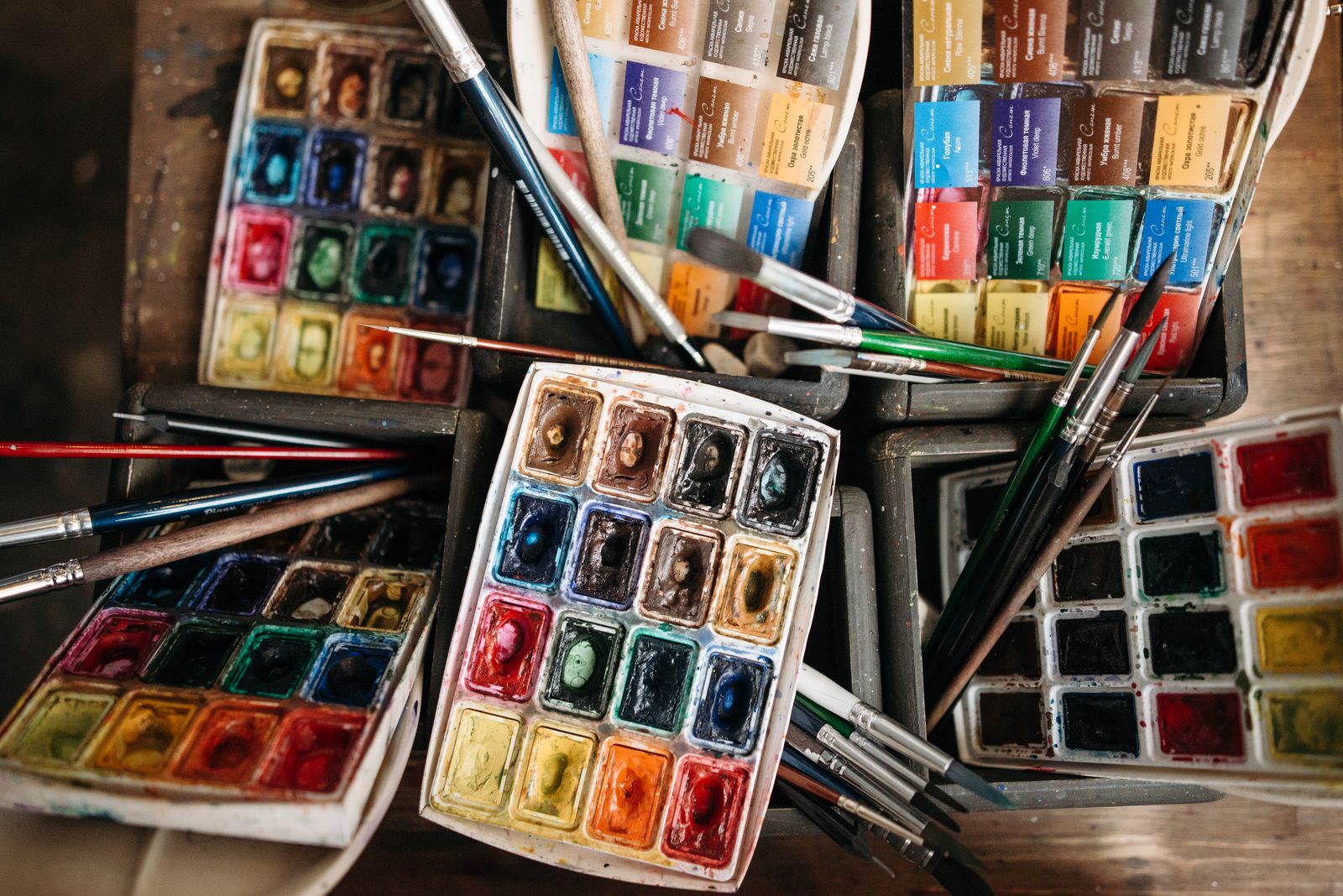
5. A professional watercolour set in half pans— Best for the person still painting with a student set from art school
Student paint is padded with fillers, so a wash dries chalky and the reds go pink overnight. Artist-grade pigment is more concentrated, which means one small pan outlasts three cheap ones and the colour you mix is the colour that stays on the paper. Twelve half pans in a metal box is the version that gets refilled instead of replaced.
6. A gouache set, if they work on paper— Best for illustrators and sketchbook painters who like flat, opaque colour
Gouache is watercolour with body: it covers a mistake instead of staining it, and it comes back to life with water the next morning. That combination makes it the most forgiving paint for someone drawing in a book on a train. Six tubes plus a large white is enough to mix almost everything, and the white is the one that runs out first.
7. Acrylics across a 24-tube range— Best for painters who work big, fast and indoors
Acrylic dries in minutes, which is either the appeal or the whole problem depending on the painter. A wide range removes the mixing step for the first hour of a session and means nothing is missing at nine at night. Heavy-body tubes hold a brush mark; the fluid ones level out and end up looking like poster paint.
8. A 72-colour pencil set with a soft core— Best for the person who draws rather than paints
Coloured pencil is the slowest medium there is, and most small sets quietly leave out the greys and dusty greens that make a drawing look photographic. Seventy-two is roughly the point where the range stops working against you. Soft cores lay down colour in two passes instead of six, which matters when a single drawing takes a week.
Paper, board, and somewhere for the finished piece
9. A hardcover sketchbook in 9 by 12— Best for sketchbook people whose pages keep falling out of a soft cover
Nine by twelve fits a full composition and still goes in a bag. A hard cover survives being sat on and gives you something to press against when there's no table, which is most of the time. Check the paper weight before you buy: under about 120gsm the first wet page ripples the rest of the block.
10. Canvas panels, six at a time— Best for oil and acrylic painters who avoid starting because canvas costs too much
A stretched canvas is expensive enough that people save it for a good idea, and then no idea feels good enough to waste it on. Panels are cheap enough to ruin, which is the entire point. The tenth one is usually the painting. They also stack flat, and a flat stack is the difference between a studio and a pile.
11. A portfolio case that isn't cardboard— Best for anyone whose finished work lives under a bed
Work on paper dies slowly. Corners bend, the top sheet bleaches in a bright room, one spilled coffee takes out the middle three. A zipped case with a rigid board keeps twenty sheets flat and dark, and it doubles as the thing you carry to a framer. Buy it larger than the paper they actually use, not the same size.
Editor’s pick
If you’re buying one thing from this page, buy the brush in the first section. It’s the only item here that changes what the work looks like rather than how easily it gets made. Everything else removes friction. A good sable turns a nervous wash into something that looks intentional, and that is the thing an artist remembers at the end of the evening.
The tilt of a room
Three items that have nothing to do with materials and everything to do with whether the materials get used.
12. A tabletop easel that changes the angle— Best for people drawing flat on a kitchen table
Work flat and everything you draw is stretched by perspective, so you spend an hour correcting a proportion that was never wrong. Tilting the board to about thirty degrees puts the page closer to square with your eye and verticals start staying vertical. A small wooden easel does that and folds into a drawer when the table is needed for dinner.
13. One case instead of six tins— Best for artists who work in the kitchen and pack everything away at night
When the supplies live in six separate containers, setting up takes ten minutes and the session quietly doesn't happen. A single case with compartments for tubes, brushes and pencils turns that into one motion and puts the whole studio in a cupboard. Hard shell, not a fabric roll, because a roll lets long brushes bend at the tip.
14. A light box for tracing and checking— Best for illustrators transferring a sketch onto good paper
Redrawing a finished sketch by eye loses the looseness that made it worth keeping. A light box transfers it in one pass. The second job nobody mentions is comparison: hold the working drawing over the reference and the proportion error shows up immediately. A3 covers most sketchbook work, and thinner panels sit flatter on a desk.
The one gift that isn’t a supply
15. A poseable figure for the hands problem— Best for anyone who avoids drawing people
Hands and shoulders are where a drawing falls apart, and no amount of video helps if you can't see the joint from the angle you need. A wooden figure lets you set a pose on the desk, turn it, and draw the same shoulder four times without asking a friend to stand still. It won't teach anatomy. It stops you guessing where the elbow sits.
What I’d leave on the shelf
The tin with forty pieces. You’re paying for the tin, half the brushes are unusable at any price, and it announces that you think art is a craft kit. Same for slogan aprons and mugs shaped like paint tubes, which get used once and then live behind a plate.
Frames are a trap for a different reason: everyone who has ever paid for framing has strong opinions about it, and yours will be wrong.
And a drawing tablet is not the gift you think it is. It’s a software decision, a driver problem and a month of learning, which makes it a project rather than a present.
What isn’t a cop-out, honestly, is a gift card to a proper art shop. It sounds lazy. It also lets them buy the one tube they’ve been circling for a year, in the exact brand, which is more thought than most wrapped objects on this page.
FAQ
What do you buy an artist who insists they have everything?
They do have everything, and they’re using it past the point where it works. Look at the brush jar, the eraser, the pencils shorter than a finger. Replacing those is the gift. Nobody buys a second good brush while the first one technically still functions, which is precisely why the first one never gets replaced.
Are art supply gift sets a good deal?
Usually not. A large tin is mostly packaging and filler, and the brushes inside are the part that gets thrown away first. Two or three genuinely good items cost the same as one impressive box and get used for years. If a set is the only option, buy one from a paint brand rather than a general craft brand.
How much should you spend on a gift for an artist?
Twenty-five to sixty dollars covers the worn layer and most of the refused layer, which is where gifts land hardest. Above that you’re into paper and easels, and those need a specific size and surface. Below twenty is fine for consumables, as long as what you buy is better than what they’d buy themselves.