Open a photographer’s bag and you’ll find two thousand dollars of body and glass sitting next to a 128GB card that has been formatted four hundred times, a lens cloth that went through the wash with fabric softener, and no quick release plate for the tripod they bought last March.
They know. That’s the thing. They are not careless people. They will read forty pages about a lens before buying it and then spend three years meaning to order a second battery.
The pattern is consistent enough to plan around: the camera gets researched, everything downstream of the lens mount gets ignored until it fails at the worst possible moment. So the useful gift is never the body, the lens, or the flash. It’s the support layer, and it’s where you can spend twenty dollars and change someone’s Saturday.
Fifteen ideas below, ordered the way a shoot actually falls apart: the card fills, something lands on the front element, the plate is missing, the light is in the wrong place, and then it’s hour four and the strap is cutting into their neck.
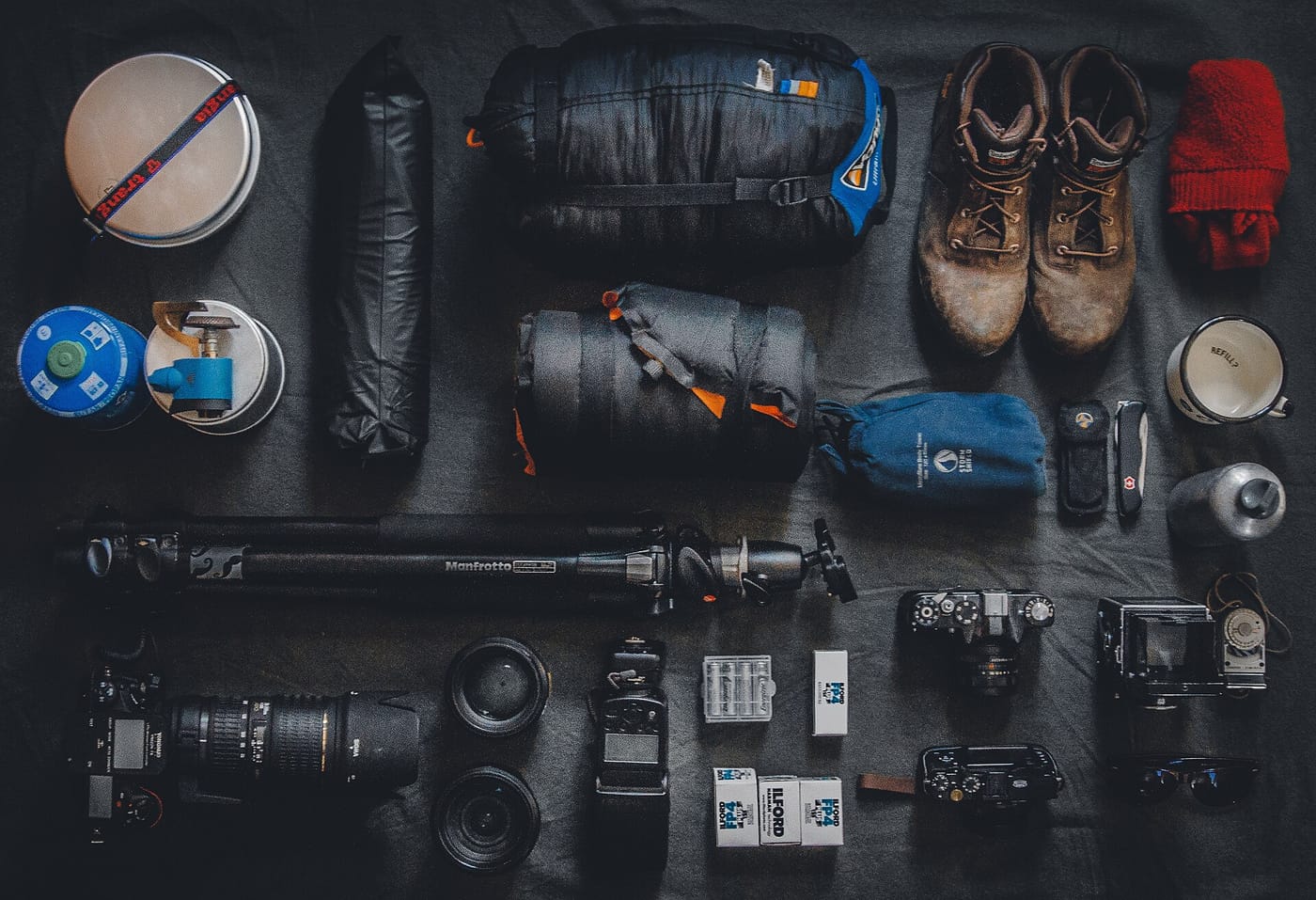
Three rules before you spend anything
Check the number on the lens cap first. Filters and step rings are sized in millimetres and 77mm is not a guess, it’s printed on the inside of the cap. If you can’t read it, buy something that doesn’t have a size.
Buy consumables in quantity. One lens cloth gets lost. Six get used. The same logic applies to cards, cleaning fluid and batteries: photographers buy the minimum because the minimum works today.
Avoid the hot shoe. Flashes, triggers, microphones, levels, and every gadget that slots on top. They’ve already made that decision, usually twice, and the third one will live in a drawer.
If you’re buying one thing
The memory card. It’s the least interesting object in this article and the only one that can end a paid job in the middle of a wedding. Most people are shooting on a card they bought when 64GB felt enormous, and they’re one full card away from a very bad afternoon. Two 128GB cards from a known brand, one in the camera and one in the bag, is a better gift than anything with glass in it.
Failure one: the card fills up
1. A 128GB card with a real write speed— Best for anyone still shooting on the card that came with the camera
A slow card doesn't just make bursts shorter, it makes the buffer clear at the exact moment the light is right. Buy a U3, V30 rated card from a brand that publishes its speeds, in the 128GB size, because that holds a full day of raw files without a mid shoot offload. Two is the correct number. One is a single point of failure.
2. A card case that lives in the bag— Best for the photographer who finds cards loose in a jacket pocket
Cards in a pocket collect lint in the contacts, and a card that fails to mount is a card that's about to be replaced. A hard case with eight slots and a coloured latch gives each card a home and makes the empty ones visibly empty. It also ends the ten minute search that happens before every trip.
3. A second charger, kept in the bag— Best for the person charging one battery at a time overnight
Everyone owns the charger that came in the box, and nobody owns a second one, so the spare battery is always the flat one. A dual slot charger means both batteries are ready the night before instead of one being ready and one being a rumour. Look for one that shows charge level per slot rather than a single blinking light.
Failure two: something lands on the front element
4. A cleaning kit that isn't a single cloth— Best for the lens with a permanent smudge at the top left of every frame
Sensor spots and lens smudges show up as a soft grey blob in the same corner of every photo, and people edit around them for months instead of cleaning the glass. A kit with a blower, a brush, lint free wipes and fluid handles the whole chain: dust off first, then liquid, never the other way round.
5. A lens pen, one per bag— Best for fingerprints, which happen mostly at the worst time
The retractable brush clears grit and the carbon tip lifts fingerprint oil without solvent, so it's safe on coated glass in a car park. It's the size of a marker and it costs less than lunch, which is why it's never in the bag when needed. Buy two and put one in the camera bag, one in the jacket.
6. A 77mm filter kit, before the scratch— Best for anyone shooting outdoors without a sacrificial piece of glass
A UV or clear filter takes the hit instead of a five hundred dollar front element, and a polariser does something no amount of editing can fake: it kills reflection on water and glass and brings back the sky. A kit with a clear filter, a polariser and a couple of ND stops covers daylight, water and long exposures. Check the thread size first.
Failure three: the plate isn’t in the bag
7. A ball head that doesn't creep— Best for the tripod with a pan and tilt head that droops with a long lens on it
Creep is the small sag that happens after you lock the head, which turns a sharp frame into a soft one three seconds later. A decent ball head locks solid, has a separate panning base for panoramas, and takes an Arca Swiss plate, which is the standard you want because plates then become interchangeable. Thirty seconds of setup saved on every shot.
8. A monopod for the places a tripod is banned— Best for museums, stadiums, crowded streets, and anyone with a bad shoulder
Most venues that forbid tripods allow monopods, and a monopod with a folded size under fifty centimetres fits in a day bag. It buys two stops of steadiness for about a kilo of weight and it doubles as a walking stick on a long day. Get one with a quick release plate so it isn't a wrestling match at every stop.
9. A remote release for the two second exposures— Best for anyone who has balanced a camera on a rock and used the self timer
Pressing the shutter moves the camera, which is why every exposure past a second has a small blur nobody can find the source of. A cable or wireless release removes the touch entirely, and on a tripod it's the difference between a usable night shot and a pile of almosts. Get one that supports bulb mode.
Failure four: the light is in the wrong place
10. A five in one reflector, folded— Best for portraits taken in doorways and against white walls
A reflector fills the shadow side of a face with light that already exists, which is the cheapest way to make a portrait look deliberate. Five surfaces in one zip cover white, silver, gold, black and diffusion, and this is the piece of gear that turns a photograph of someone into a portrait of them. Get the 80cm size, not the 110.
11. A ring light that's actually for portraits— Best for anyone shooting headshots in a room with one window
Continuous light means they see the result before pressing the button, which is why it teaches faster than a flash. A ring light on a stand gives even, shadowless light with a catchlight in the eye, and the good ones switch between daylight and tungsten so skin doesn't go orange. Buy one with a stand tall enough to sit above eye level.
12. A backdrop stand, for the shots that need a plain wall— Best for anyone photographing products, pets or children at home
Every home has one wall that works and it's usually behind the sofa. A backdrop stand with a crossbar takes a paper roll or a muslin and turns any corner into a studio in four minutes. Get one rated for at least three kilos, because a heavy paper roll will bow a cheap crossbar into a curve you'll see in the frame.
Failure five: carrying it all day, then never printing it
13. A leather strap that gets better with use— Best for the camera still on the strap that came in the box with the brand printed on it
The stock strap is a nylon billboard with a hard edge, and after three hours it leaves a red line across the neck. A leather strap softens with sweat and sun, distributes weight across the shoulder, and stops the whole setup from looking like it was just unboxed. Check the lug type first: split rings and quick connectors are not interchangeable.
14. A messenger bag they'll actually carry— Best for the backpack that gets left at home because it's too much bag
The camera someone uses is the camera they brought, and the bag decides that. A messenger with a padded insert, a top zip for fast access and a weather flap gets used on ordinary days, which is when the good photos happen. Measure the body plus the longest lens before choosing a size, then go one size up.
15. An instant printer for the photos that never leave the drive— Best for the person with forty thousand photos and nothing on the wall
A printer that connects to a phone over wifi turns the camera roll into a physical object in about a minute, which is why people stick the results to fridges and notice them. It also solves the gift-within-a-gift problem: print three from their last trip and put them in the box. Skip it if they already own a proper photo printer and a colour profile.
What they’ll ask for instead
A new lens. It’s always a new lens, and it’s the one thing you should not buy, because focal length is a religious position and the wrong one will be politely thanked and never mounted.
Same with SD card wallets that look like leather books, camera shaped cushions, and anything printed with a shutter speed. Those are gifts about photography. The list above is for a photographer.
FAQ
What do you get a photographer who has everything?
Nothing on the camera itself. Go downstream: cards, a second charger, a filter in the right thread size, a card case, a proper strap. These are the items that stay broken for years because they’re boring to buy and easy to forget. A card and a charger will be used on the next shoot.
Is a camera a good gift for someone who’s into photography?
Rarely. Body choice depends on the lenses they already own, and a gift camera in the wrong mount is a dead end. If you want to spend that much, a gift card to a camera shop is more useful than a surprise body, and it doesn’t lock them into a system they didn’t pick.
How much should you spend on a gift for a photographer?
Twenty to fifty dollars covers the things that matter most: cards, cleaning gear, a release, a reflector. Sixty to a hundred gets into ball heads, monopods and bags, where the spec matters and it’s worth asking first. Above that, buy a lens only if they’ve named the exact model.