There is a guitar in that person’s flat with strings that went dull some time last spring. It still gets picked up. It gets put back down about ten minutes later, because it sounds like a rubber band, tuning it is a chore, and the case is under the bed behind two pairs of boots.
None of that is the guitar’s fault, which is the useful part.
Ask what to buy a musician and someone will start talking about guitars, keyboards, pedals. The instrument itself is the one thing you cannot buy for them. Scale length, neck profile, weight, the way the body sits against their ribs, whether the fret edges feel right on the index finger: they spent eleven weeks on that decision and they will spend eleven weeks quietly disagreeing with yours.
The gifts that land sit somewhere between the player and the instrument. A capo that clamps flat. Twelve sets of strings. A stand, so the thing comes out of the case on a Tuesday instead of a weekend.
Fifteen of those below, ordered by distance from their hands: what they touch while playing, what touches the guitar, what holds it up, and what ends up on the desk beside them.
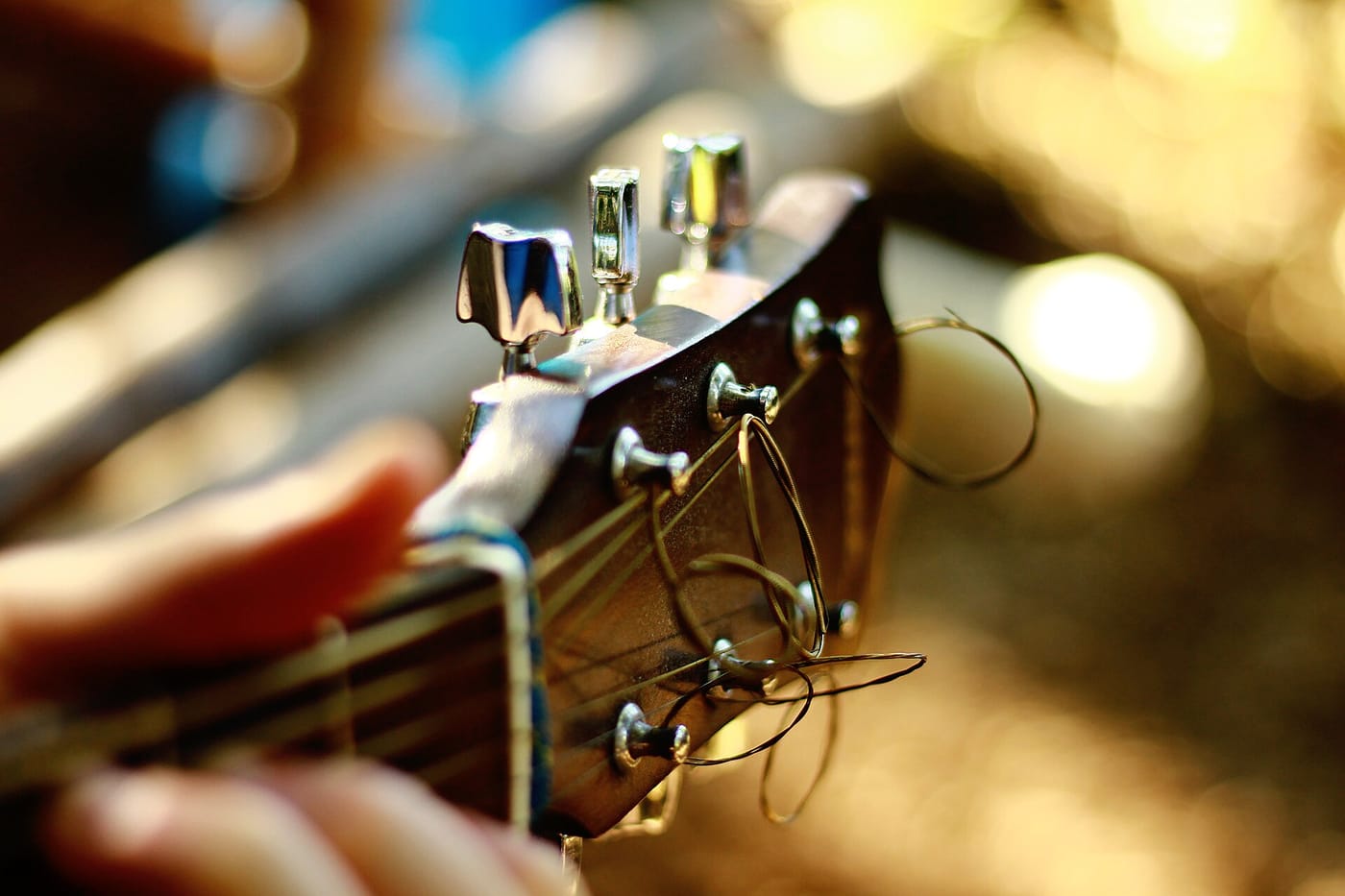
The distance test
I sort guitar gifts by how far they sit from the player’s hands, because that distance predicts how often the thing gets used.
In the hands is the playing itself. Anything here gets touched in the first thirty seconds, so the payoff is immediate and the price stays low.
On the instrument is maintenance, and it is the category nobody buys for themselves. Strings, oil, a cloth. They will spend forty minutes watching a video about fretboard oil and then not order any.
Around the instrument is furniture. Stands, hangers, bags. Unglamorous, and the single biggest variable in whether a guitar gets played at all.
Beside the instrument is where playing turns into practice or recording. This is the expensive end, and the end where you’re most likely to buy something they already own.
Two filters cut most of the bad ideas. If a gift has to be sized, fitted, or matched to a specific instrument, it’s an errand, not a present. And if it can be bought from the front rack of a music shop for eight dollars, they already have two of them.
In their hands, while they play
1. A capo with adjustable tension— Best for anyone who plays in a different key every other song
A cheap capo clamps harder on one side than the other, which pulls the G string sharp and makes the whole guitar sound wrong. They will blame their ear, then the guitar, then stop using the capo. A spring clamp with a tension screw sits flat across all six strings, so the chord that was in E is now in F and still in tune.
2. A brass slide, because it sounds different— Best for the player who has tried slide once and given up
Most people try slide with a glass one, on a guitar set up for normal playing, and it rattles. Brass is heavier, so it sustains longer and covers the fret noise. It won't fix the setup, but it makes the first ten minutes sound like music instead of a cutlery drawer, which is what gets someone to try again.
3. A tuner that clips to the headstock— Best for the person tuning by ear at a party, badly
Phone tuners are fine until the screen dims or the room is loud enough that the microphone hears the conversation instead of the guitar. A clip-on reads vibration through the wood, so it works in a noisy kitchen and it's already attached when they sit down. Leave it clipped on and it becomes part of the guitar.
4. A strap with actual padding— Best for anyone who has played standing up for more than an hour
Thin nylon webbing turns into a wire across the shoulder somewhere around the forty minute mark, and that is usually when the set is getting good. A three inch padded strap with a suede backing spreads the weight and stops the guitar sliding down the shirt while they play. Small change, four hours of difference.
The part of the guitar they never look at
Six strings that went dull in spring, a fretboard that dries out in winter, and a truss rod they’re slightly afraid of. This is the section where a gift actually fixes something.
5. A twelve pack of the strings they already use— Best for everyone, honestly, but especially the person with dead strings
Nobody wants to spend fifteen dollars on strings, so the guitar keeps its dull set for another six months and slowly stops being played. A box of twelve removes the decision for a year. Buy phosphor bronze 12 to 53 for an acoustic if you don't know their gauge; for electric, 10 to 46 is the safe middle.
6. Fret markers, for the person still counting— Best for adult beginners who learned late and never memorised the neck
Everyone who starts after thirty counts frets with their eyes, and the count resets every time they move position. Removable note stickers put the names on the neck for a month, then peel off without residue. Only buy these for a beginner. Handing them to someone who has played for twenty years reads as a comment on their playing.
7. A maintenance kit that isn't a gimmick— Best for the guitar that sounds tired rather than broken
A dry fretboard in February makes an acoustic sound thin, and the fix is twenty minutes with lemon oil and a cloth. A kit with fretboard oil, a string winder, a microfibre cloth and the right hex keys covers the whole job. The winder alone saves ten minutes per string change, which is the actual reason strings get changed so rarely.
Where it lives when nobody is playing
The stand is not a decorative object. It’s a behavioural one. Guitars in cases get played about a third as often as guitars on stands, and that gap is entirely about the four seconds it takes to open a zip.
8. A stand that folds flat— Best for the guitar currently leaning against a wall, at an angle, on a wooden floor
An A frame stand costs less than a set of strings and turns the guitar into furniture you can grab. Check two things before buying: that the yoke is foam covered, because bare metal and nitrocellulose lacquer have a long history of ruining each other, and that it folds flat enough to go in a cupboard when the room needs to look like a room.
9. A wall hanger, so it's the first thing they see— Best for small flats where floor space is already a negotiation
A guitar on the wall above the desk gets picked up during loading screens. The auto locking yoke holds the neck so it can't fall out, and mounting into a stud takes fifteen minutes with a drill. Do not install it as a surprise while they're out, because the height has to suit the person who actually plays it.
10. A gig bag with neck support— Best for the player carrying an electric to rehearsal in a soft bag with no padding
A cheap bag protects the body and forgets the headstock, which is the part that snaps when the bag goes over on a staircase. Look for a bag with a neck rest and at least twenty millimetres of foam at the headstock end. It's the least exciting gift here and the one that prevents a four hundred dollar repair.
The desk, the shelf, and one wildcard
This section is where playing becomes practicing, and where the price climbs. Everything here is still cheaper than the instrument, which is the only comparison that matters.
11. A music stand that doesn't wobble— Best for anyone learning from printed pages instead of a screen
A wobbly stand means every page turn is a small emergency, and the tablet on a music stand app goes to sleep mid piece. A solid metal stand with a solid desk and a page retainer holds a book open flat. It also gives the room a place where sheet music lives, which is how a stack of printouts stops migrating around the flat.
12. A metronome that sits on the stand— Best for the player whose timing improves the moment nobody's listening
A physical metronome stays on the music stand with the tempo already set from last night, which is why it gets used. An app is one unlock screen away from a notification. Get one with a dial or buttons and a headphone jack, and set it to something slow before you wrap it, because the joke of setting it to 208 is only funny once.
13. A headphone amp for the 11pm idea— Best for flat shares, thin walls, and anyone with neighbours
The songs that get finished are the ones played at the hour when the amp can't be turned on. A headphone amp plugs into the guitar and into a pair of headphones and gives them a driven, room filling sound at a volume nobody else can hear. It's the gift that changes when they're allowed to play, not just what they play through.
14. A USB microphone for the voice memos that never become songs— Best for the writer whose ideas currently die in a phone recording
Every guitarist has forty voice memos of half a chorus recorded next to a washing machine. A USB mic on a desk stand turns that into something they can actually listen back to, and it needs no interface, no cable adapter, no software beyond what's already installed. Buy one with a headphone output so they can hear themselves while recording.
15. A ukulele, for the person who only plays guitar— Best for the household that wants something playable at midnight
This is the wildcard, and it works for a specific reason: a ukulele is quiet, cheap, tuned in fourths and impossible to take seriously, which makes it the instrument people actually pick up while waiting for the kettle. A starter kit with a gig bag and a clip on tuner covers everything. Skip it if the person is a serious multi instrumentalist. They have opinions about ukes.
Two things I’d skip
Picks. They own forty, they know whether they like 0.73 or 1.0 millimetres, and yours will go in the tin with the rest. This is the most common musician gift and the least remembered.
Anything shaped like an instrument. Guitar shaped bottle openers, fretboard coasters, amps printed on socks. These are gifts about music rather than for a musician, and they end up in the same drawer every year.
One more: don’t buy an instrument unless they have named the exact model. A surprise guitar is a surprise setup problem, and it will sit next to the one they already love.
The one that changes the week
If you buy one thing from this list, make it the headphone amp. It doesn’t improve the guitar. It moves playing into the hours when the flat is quiet and the guitar would otherwise stay in its case, and that’s a bigger change than any accessory on this page.
If you want the safe answer instead, get the capo. Twenty five dollars, works on every acoustic guitar ever made, and the improvement is audible on the first chord.
FAQ
What do you buy a musician who says they have everything?
Believe the instrument claim and doubt the accessory claim. Look at the strings, the capo, the bag, the stand. Those are the items that stay broken for years because replacing them is boring. A box of the strings they already use is the least romantic and most appreciated gift in this article.
Do musicians actually want strings as a present?
Yes, if you get the gauge right, and it’s fine to ask. Strings are the one thing every player consumes and nobody enjoys buying. A twelve pack lasts a year and gets used to the last set. Avoid novelty coloured strings and coated sets unless you know they already like them.
How much should you spend on a gift for a musician?
Twenty five to fifty dollars covers the entire functional layer: capo, tuner, stand, strap, maintenance kit. Above that you’re into gig bags, microphones and interfaces, where the model matters and a wrong guess is expensive. Below twenty, strings and fret markers are the only things worth buying.